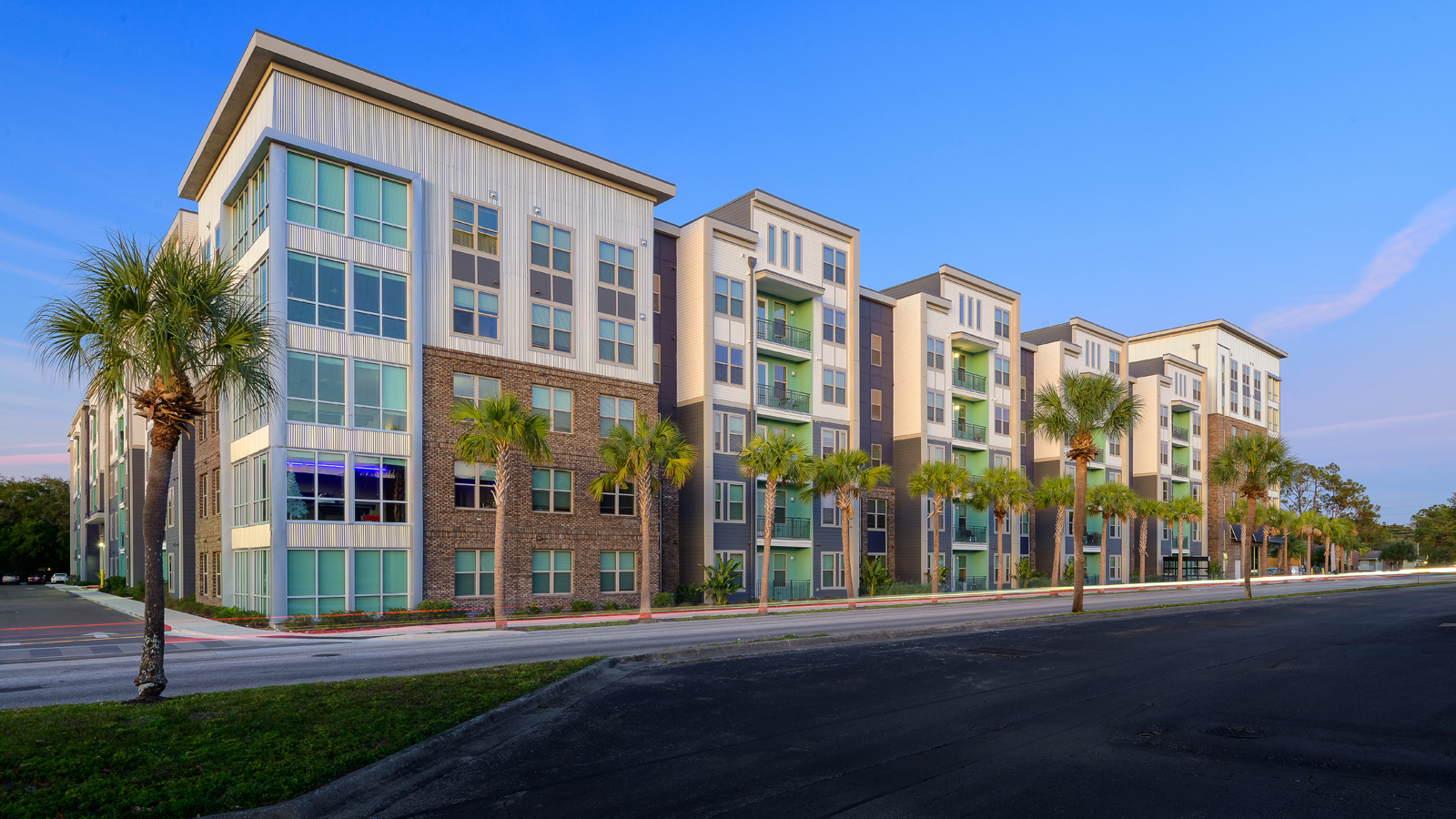
Maria had two weeks to decide. Her landlord had slipped a renewal notice under her door in October: same two-bedroom apartment in northeast Tampa, up $400 a month. She called three other complexes nearby. Two were already more expensive. One had a waitlist.
She signed the new lease.
Across Tampa, tenants who were squeezed by one of the fastest rent spikes in the country are now caught in a second trap: they can't afford to stay, but they have nowhere else to go. Moving costs money most of them don't have. The market around them is just as expensive. So they dig in — cutting back, doubling up, taking on debt — and wait.
"I looked everywhere. I couldn't find anything cheaper, and I couldn't afford to just not have a place to live."— Maria, Seminole Heights resident, Tampa Resident since 2012
The Numbers Behind the Squeeze
Tampa's rent crisis did not happen overnight. Between 2019 and 2022, the average monthly rent in the city climbed from roughly $1,350 to $2,089 — a jump of more than 54 percent in three years. At its peak, Tampa ranked seventh in the nation for year-over-year rent growth, with prices rising 31 percent from January 2021 to January 2022 alone, according to Redfin data published by WFLA.
Wage growth did not keep pace. According to U.S. Census Bureau American Community Survey estimates, the median household income for Tampa renters lagged well behind the income needed to comfortably afford market-rate rent. Under the standard 30-percent-of-income threshold, a renter would need to earn roughly $76,800 a year to afford the 2022 average rent without being cost-burdened. Most do not come close.
By 2022, Tampa renters were spending an average of 42 percent of their income on rent — the fourth-worst rate in the United States, according to the "Priced Out" affordability report, which analyzed rental data in 345 cities worldwide. That figure rose from 36 percent just five years earlier.
"This is a full-fledged crisis," said Christopher Lai, a Tampa real estate agent with more than 15 years in the market, in a 2022 interview with NBC News. "People want to buy a house, to move up, but now you may have a whole generation of renters who won't be able to buy a home because they're priced out."
Rents have since cooled from their 2022 peak — the current citywide average sits around $2,034. But for renters who absorbed those increases and signed leases at elevated prices, the moderation has been largely theoretical. Their rent did not go back down.
Why Tampa Renters Are Not Leaving
The conventional logic of a hot rental market says that when prices get too high, people move. They find something cheaper in a neighboring town, squeeze in with family, or drive until they can afford to buy. In Tampa, that logic has run into a wall.
There is simply nowhere nearby that is meaningfully cheaper and still logistically viable. Sulphur Springs and Lowry Park, two of Tampa's most affordable neighborhoods, average around $1,481 a month — still more than $17,700 a year in rent. For a renter earning $40,000 before taxes, that is nearly half of take-home pay.
Moving carries steep upfront costs — security deposits, first and last month's rent, a moving truck, time off work. For renters already making thin monthly payments, that lump sum is out of reach.
"I checked probably a dozen places. Everything in my area was already more expensive or just as bad. And even if I found something cheaper, I didn't have the deposit money sitting around to make a move happen."— David, renter in Temple Terrace, Tampa
The pandemic accelerated a pattern already forming. Thousands relocated to Tampa from more expensive metros during 2020 and 2021, drawn by remote work flexibility and Florida's tax climate. The rental vacancy rate fell below 5 percent. With limited inventory and surging demand, landlords — including a growing number of institutional investors buying up single-family homes — pushed rents sharply higher.
In 2022, affordable housing listings in Tampa decreased by 46 percent while overall housing prices rose by 26 percent. Hillsborough County issued more than 8,400 writs of possession — the final legal step in the eviction process — in 2021, according to Clerk of Court records.
"Tampa ranked ninth worst in the world for the decline in housing affordability between 2017 and 2021."— 2022 "Priced Out" global affordability report
No Rent Control, No Ceiling
If Tampa's renters were hoping for relief from city or state government, those hopes were shut down in 2022 and 2023 in quick succession.
In August 2022, the Tampa City Council considered an ordinance that would have capped rent increases on multifamily units at 5 percent annually. The council voted it down, 4 to 2, after critics raised concerns about vague definitions and potential legal challenges.
Then, in March 2023, Florida Gov. Ron DeSantis signed Senate Bill 102, known as the Live Local Act, into law. Among its provisions, the bill explicitly prohibited rent control across the entire state, preempting local governments from enacting any such ordinance. By July 2023, the law had effectively voided more than 40 local tenant protection ordinances across Florida, including several in Hillsborough County, according to an analysis by the National Low Income Housing Coalition.
"The power to address the needs of tenants will be shifted from local governments to the state," the coalition wrote at the time, warning that protections "previously secured by individual cities and counties may be weakened or disregarded, potentially leaving vulnerable tenants without adequate protections."
Tampa's own Tenants Bill of Rights — passed by City Council in early 2022 — was among the measures swept aside.
"You still have more people wanting to live in this market than there is housing available for them at prices they can actually afford. Cooling off from a historic spike is not the same thing as becoming affordable again."— Abbie, Local Realtor
The Live Local Act did include $711 million in funding for affordable housing programs statewide — the largest such allocation in Florida history. But housing advocates say a supply-side approach will take years to produce meaningful results, and tenants being squeezed today cannot wait that long.
"By July 2023, Florida's new law had voided more than 40 local tenant protection ordinances — including several in Hillsborough County."— National Low Income Housing Coalition, 2023
What Renters Are Actually Doing
With few options and no policy backstop, Tampa's renters are improvising.
Some are taking in roommates — converting one-bedroom units into de facto two-person apartments. Others are working additional jobs, cutting back on food and health care, or carrying credit card balances to cover rent. A Consumer Affairs survey found that 48 percent of renters nationally had taken on debt to pay housing costs — a figure housing advocates say reflects what they see in Tampa.
Some are moving further out — to Zephyrhills, Ruskin, or Dade City — absorbing longer commutes in exchange for marginally lower rent. New Port Richey, about 30 miles north of downtown Tampa, averages $1,325 a month — nearly $600 less than the Tampa average, but a 45-minute drive in light traffic. For renters without a car or job flexibility, that tradeoff is not available.
An Affordability Future With No Clear Floor
Tampa's identity has long been tied to its relative affordability — a major Gulf Coast city where a normal salary could stretch far enough to build a life. That reputation is increasingly out of date.
The median renter income in Tampa sits well below the income needed to comfortably afford average rent — a gap of tens of thousands of dollars a year. It reflects a market that has repriced structurally faster than the people living in it can keep up with.
Florida has no statewide rent protections, no renter assistance program at meaningful scale, and a legal framework that now prevents local governments from creating their own safeguards. What it has instead is a supply-side bet: that building more units will eventually bring costs down. Most economists agree that theory is sound over time. The question Tampa's renters are living with is how much time.
"At some point something has to give. I just don't know if it's going to be me or the market."— David, Temple Terrace resident
- Rent data: Zillow, CoStar, Eaton Realty, RentCafe — historical figures 2019–2024
- Income data: U.S. Census Bureau American Community Survey (ACS), 1-year and 5-year estimates
- Affordability statistics: 2022 Priced Out Property report; National Low Income Housing Coalition "Out of Reach" (Florida)
- Eviction data: Hillsborough County Clerk of Court records, 2021
- Policy: Florida SB 102 (Live Local Act, March 2023); National Low Income Housing Coalition preemption analysis, July 2023
- Reporting: NBC News; WFLA; Creative Loafing Tampa Bay